Introduction
At a time when global politics is witnessing rapid changes, a fresh diplomatic development between Iran and the United States has captured international attention. The recently announced Iran-US Deal has sparked discussions across governments, financial markets, and diplomatic circles, with many viewing it as a positive step toward reducing tensions in West Asia.
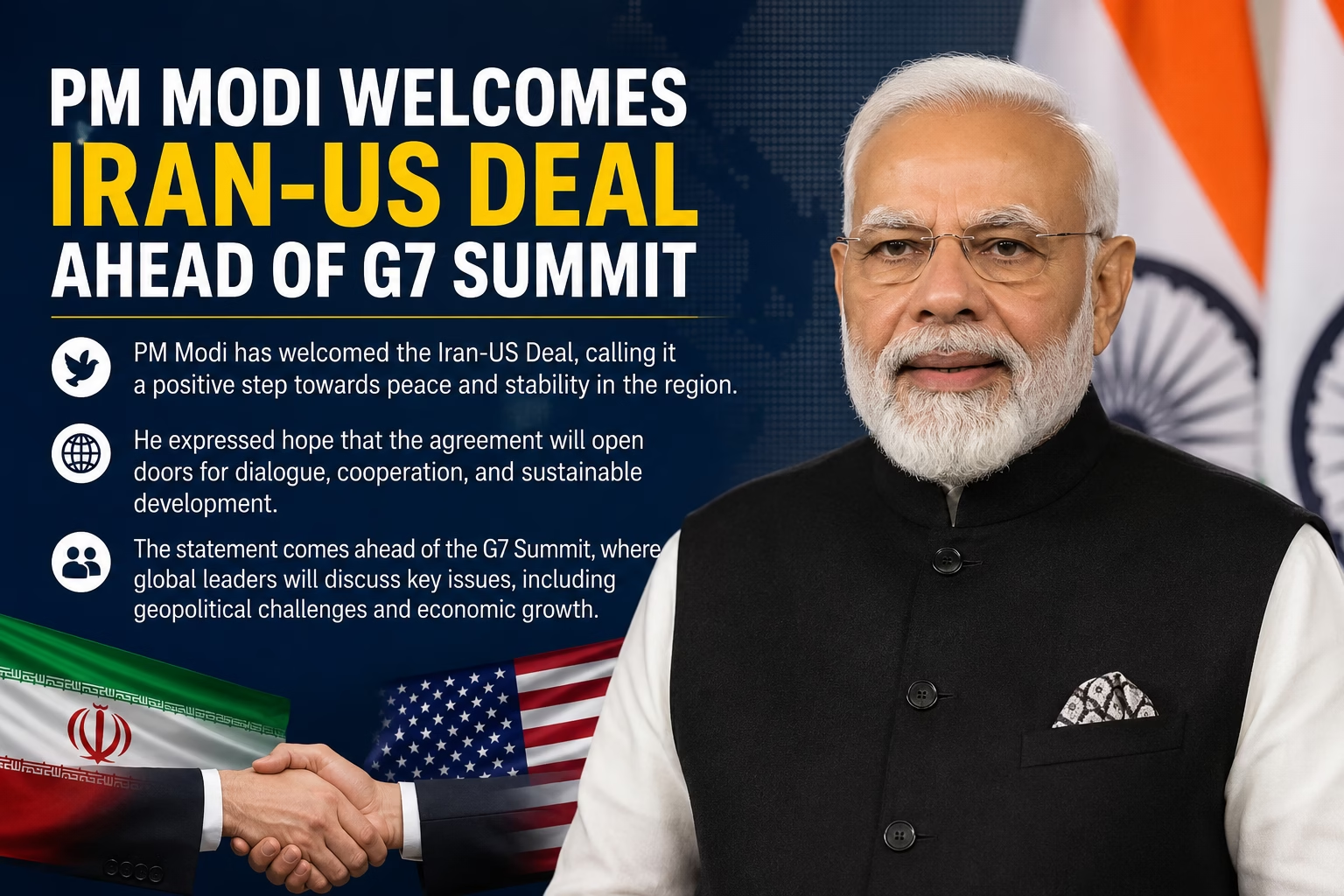
Prime Minister Narendra Modi has welcomed the agreement and expressed hope that it will contribute to peace, regional stability, and uninterrupted trade. His remarks come just before the G7 Summit, where world leaders are expected to discuss key global issues, including security, energy supplies, economic growth, and international cooperation.
For India, the significance of the Iran-US Deal extends beyond diplomacy. The country has deep economic and strategic interests in West Asia, making regional stability an important priority for policymakers.
A Diplomatic Breakthrough That Has Drawn Global Attention
The relationship between Iran and the United States has remained complicated for decades. Political disagreements, sanctions, regional rivalries, and security concerns have often placed the two nations on opposite sides of major international issues.
Because of this history, any sign of dialogue between Washington and Tehran attracts worldwide attention. The latest Iran-US Deal is being viewed as an important attempt to reduce tensions and create room for constructive engagement.
Although experts caution that long-term success will depend on implementation and trust-building, the agreement has nevertheless been welcomed as a positive development. Many countries believe that reducing tensions in such a strategically important region could benefit the global economy and international security.
PM Modi’s Positive Response to the Iran-US Deal
Prime Minister Narendra Modi reacted positively to the announcement and emphasized the importance of maintaining peace in West Asia. India has consistently supported diplomatic solutions to international disputes, and the government’s response reflects that long-standing approach.
By welcoming the Iran-US Deal, India has signaled its support for dialogue over confrontation. The Indian leadership believes that diplomatic engagement remains the most effective way to resolve complex international disagreements.
The Prime Minister also highlighted the importance of secure trade routes and regional stability. These issues are particularly relevant for India because of its growing economy and increasing energy needs.
Why the Iran-US Deal Matters for India
India’s relationship with West Asia has expanded significantly over the years. The region plays a critical role in India’s energy security, trade activities, and strategic interests.
The Iran-US Deal could have a direct impact on several areas that are important to India’s future growth.
Energy Security
India imports a large share of its crude oil requirements from countries in the Gulf region. Reduced tensions could help ensure more stable energy supplies and reduce concerns about disruptions.
Trade and Commerce
West Asia serves as an important trade corridor for India. A peaceful regional environment helps businesses operate with greater confidence and supports international commerce.
Indian Communities Abroad
Millions of Indians live and work across the Gulf region. Stability contributes to their safety and strengthens economic ties between India and regional nations.
Economic Planning
Geopolitical uncertainty often affects financial markets and business sentiment. The Iran-US Deal could help create a more predictable environment for investment and growth.
The Connection Between the Iran-US Deal and Global Oil Prices
One of the biggest reasons the Iran-US Deal has attracted attention is its potential effect on oil markets.
The Middle East remains one of the world’s most important energy-producing regions. Whenever tensions rise, concerns about supply disruptions often push oil prices higher. This can increase transportation costs, affect businesses, and place pressure on consumers.
The latest Iran-US Deal has raised hopes that energy markets may experience greater stability in the months ahead.
If tensions continue to ease, possible benefits include:
- More predictable oil prices.
- Improved investor confidence.
- Lower risks for energy transportation.
- Better conditions for global economic growth.
- Reduced uncertainty in financial markets.
These outcomes would be welcomed by both developed and developing economies.
Why the Strait of Hormuz Remains a Key Concern
Any discussion about regional stability in West Asia eventually leads to the Strait of Hormuz.
This narrow waterway is one of the most important shipping routes in the world. A significant percentage of global oil exports pass through it every day. Even minor disruptions can affect energy markets and international trade.
The Iran-US Deal has generated optimism because a reduction in tensions could help ensure smoother movement of commercial vessels through this strategic route.
For countries like India that rely heavily on imported energy, secure maritime trade routes are essential for economic stability.
International Reactions to the Iran-US Deal
The announcement has received a largely positive response from many countries and international organizations.
Diplomatic observers have described the Iran-US Deal as an encouraging development at a time when several regions around the world continue to face instability. While many leaders remain cautious about predicting long-term outcomes, there is broad agreement that dialogue is preferable to conflict.
Financial markets have also paid close attention to the agreement. Investors often react positively when geopolitical risks appear to be decreasing, particularly in regions that influence energy supplies and trade.
The global response highlights how developments between Iran and the United States can affect countries far beyond the Middle East.
Why the Iran-US Deal Could Dominate Discussions at the G7 Summit
The timing of the agreement is particularly significant because it comes just before the G7 Summit.
World leaders attending the summit are expected to discuss several issues directly connected to the Iran-US Deal.
Energy Security
Stable energy supplies remain a priority for both developed and developing economies.
Economic Growth
Reducing geopolitical tensions can support investment, trade, and business confidence.
Regional Stability
The agreement may serve as an example of how diplomatic engagement can help address complex international disputes.
Global Trade
Safe and secure shipping routes are essential for maintaining international commerce.
Because of these factors, the Iran-US Deal is likely to remain an important topic during conversations among world leaders.
Challenges That Could Influence the Success of the Iran-US Deal
While the agreement has been welcomed, several challenges remain.
Trust Deficit
Years of political disagreements have created deep mistrust between both sides.
Implementation Issues
The long-term success of the Iran-US Deal will depend on whether commitments are fully implemented.
Regional Complexities
West Asia remains a region with multiple political and security challenges.
Maintaining Diplomatic Momentum
Sustained dialogue will be necessary to prevent future misunderstandings and tensions.
Experts believe these challenges can be addressed, but only through continued engagement and patience.
India’s Growing Role in International Diplomacy
India’s influence on the global stage has increased steadily in recent years. The country has worked to maintain balanced relationships with major powers while supporting peace and cooperation.
India’s response to the Iran-US Deal reflects this approach. By supporting diplomatic efforts, New Delhi has reinforced its image as a nation that values dialogue, stability, and constructive engagement.
As India’s global profile continues to grow, its views on international issues are receiving greater attention from governments and policymakers around the world.
Conclusion
The Iran-US Deal represents a significant diplomatic development that has the potential to influence regional stability, energy markets, and international trade. Prime Minister Narendra Modi’s positive response reflects India’s interest in a peaceful and secure West Asia, a region that remains vital to the country’s economic and strategic interests.
Although challenges remain, the agreement has created a sense of cautious optimism among governments and businesses alike. As leaders gather for the G7 Summit, the Iran-US Deal is expected to remain at the center of international discussions.
If the agreement leads to lasting cooperation and reduced tensions, it could become an important milestone in efforts to promote peace, strengthen economic confidence, and support global stability in the years ahead.
Iran Deal Nears Crucial Stage as Global Attention Turns to Washington and Tehran