Introduction
The world of adventure sports is built on a combination of thrill and trust. Participants willingly take part in activities that push their limits because they believe trained professionals have taken every possible step to ensure their safety. However, a recent Brazil Jump Tragedy has raised serious concerns about what can happen when even the most basic safety procedures fail.
A 21-year-old woman lost her life during a rope-jumping activity in Brazil after a crucial safety cord was allegedly not attached before the jump. The shocking incident has sparked public outrage, triggered a police investigation, and reignited discussions about safety standards in adventure tourism.
What was meant to be an exciting day filled with adrenaline and unforgettable memories ended in a tragedy that has left a family grieving and a nation demanding answers.
How the Brazil Jump Tragedy Unfolded
The victim, Maria Eduarda Rodrigues de Freitas, arrived at the jumping site expecting an exciting adventure experience. Like many young thrill-seekers, she trusted the organizers and instructors responsible for ensuring her safety.
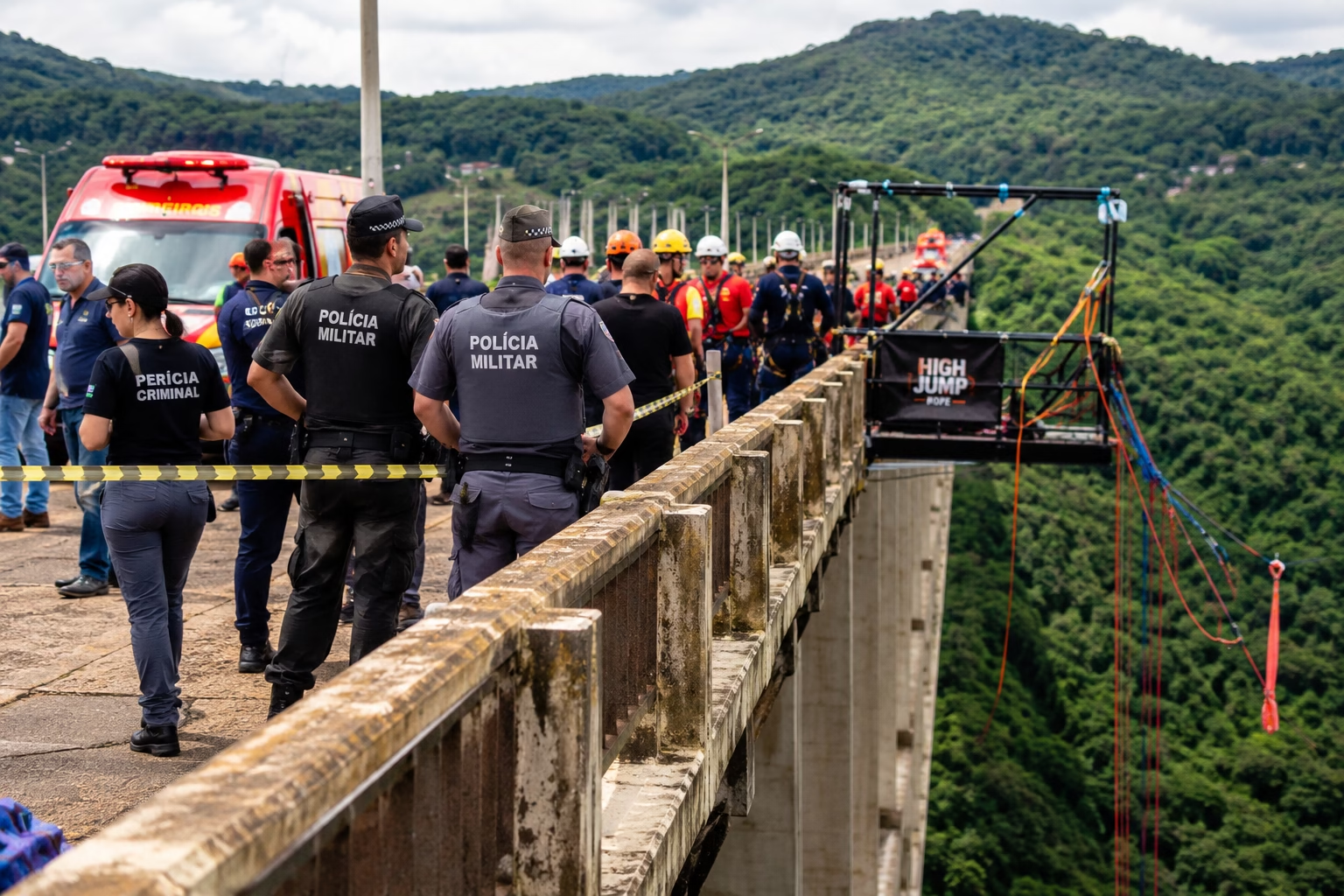
According to reports, the activity was taking place from a bridge commonly used for adventure sports. Participants were preparing for jumps under the supervision of trained staff members, and everything appeared normal before the incident occurred.
However, moments after Maria was launched from the platform, witnesses reportedly realized something had gone terribly wrong. Investigators later suggested that the safety cord designed to protect her may not have been attached before the jump.
The Brazil Jump Tragedy quickly became national news because of the shocking nature of the alleged mistake.
Why Safety Procedures Are So Important
Every adventure sport carries an element of risk. Whether it is skydiving, bungee jumping, rock climbing, or rope jumping, participants depend on equipment and trained professionals to minimize danger.
The Brazil Jump Tragedy has highlighted why safety checks are considered the most important part of any extreme activity.
Industry experts explain that operators typically follow strict procedures before allowing anyone to jump. These include:
- Checking the harness.
- Confirming rope connections.
- Inspecting safety equipment.
- Conducting final verification checks.
- Receiving clearance from multiple instructors.
These measures are designed to prevent exactly the type of accident that investigators believe occurred in this case.
The Moment Everything Changed
Witnesses described scenes of panic immediately after the jump.
What began as an adventure activity quickly transformed into an emergency situation. People at the site reportedly realized that something was wrong within seconds, leading to confusion and frantic attempts to understand what had happened.
The Brazil Jump Tragedy stunned everyone present because such incidents are extremely rare when proper safety protocols are followed.
Emergency responders rushed to the scene and worked to provide medical assistance. Despite their efforts, the young woman later succumbed to her injuries.
News of the incident spread rapidly across Brazil and soon attracted international attention.
Investigation Into the Brazil Jump Tragedy
Authorities launched an investigation shortly after the accident.
Police officers began collecting evidence, reviewing video footage, examining equipment, and interviewing witnesses. The goal is to determine exactly how the incident occurred and whether negligence played a role.
The investigation into the Brazil Jump Tragedy is focusing on several critical questions:
Who Was Responsible for Safety Checks?
Investigators are attempting to determine which staff members were responsible for verifying the equipment before the jump.
Were Standard Procedures Followed?
Authorities want to know whether the organizers followed established safety protocols or whether key steps were overlooked.
Could the Accident Have Been Prevented?
Many experts believe the answers to these questions will reveal whether the tragedy resulted from human error or broader operational failures.
Public Reaction and Growing Anger
The Brazil Jump Tragedy has generated strong reactions from people across the country.
Social media users expressed shock that such a basic safety failure could allegedly occur during a supervised activity. Many questioned how multiple staff members could fail to notice that a participant was not properly secured.
Others called for stricter regulations governing adventure tourism companies and more frequent inspections of extreme sports operators.
For many people, the most disturbing aspect of the incident is the belief that it may have been entirely preventable.
What This Means for the Adventure Tourism Industry
Adventure tourism has experienced tremendous growth over the last decade. Millions of people participate in activities such as rope jumping, bungee jumping, ziplining, and skydiving every year.
The Brazil Jump Tragedy has forced the industry to confront difficult questions about training, supervision, and accountability.
Experts say operators must continually review safety procedures to ensure that mistakes do not occur. They also emphasize the importance of creating systems where multiple people verify equipment before any participant is allowed to proceed.
The incident serves as a reminder that even experienced professionals cannot afford to become complacent when lives are at stake.
A Family Left Searching for Answers
Behind the headlines and investigation reports is a family dealing with unimaginable grief.
For Maria’s loved ones, the Brazil Jump Tragedy is more than a news story. It represents the loss of a daughter, friend, and family member whose life ended during an activity she trusted would be conducted safely.
As authorities continue their investigation, the family hopes to receive clear answers about what happened and who may be responsible.
While legal proceedings may eventually determine accountability, nothing can replace the life that was lost.
Lessons From the Brazil Jump Tragedy
One of the most important lessons from the Brazil Jump Tragedy is that safety procedures should never be treated as routine tasks.
Every checklist, every equipment inspection, and every verification step exists because human lives depend on them.
Experts believe that several measures can help reduce the risk of similar accidents:
- Mandatory double-check systems.
- Better staff training.
- Frequent equipment inspections.
- Stronger government oversight.
- Clear accountability protocols.
These practices can help ensure that adventure activities remain exciting while maintaining the highest possible safety standards.
Conclusion
The Brazil Jump Tragedy has become one of the most heartbreaking adventure sports incidents in recent memory. A young woman set out to enjoy an exciting experience but instead became the victim of what investigators believe may have been a preventable safety failure.
As authorities continue to examine the circumstances surrounding the accident, the case serves as a powerful reminder that safety can never be taken for granted.
For the victim’s family, the loss is immeasurable. For the adventure tourism industry, the tragedy is a wake-up call. And for the public, it is a reminder that behind every headline is a real person whose life was changed forever in a matter of seconds.
OTT Releases This Week: Fresh Movies and Shows Ready to Stream