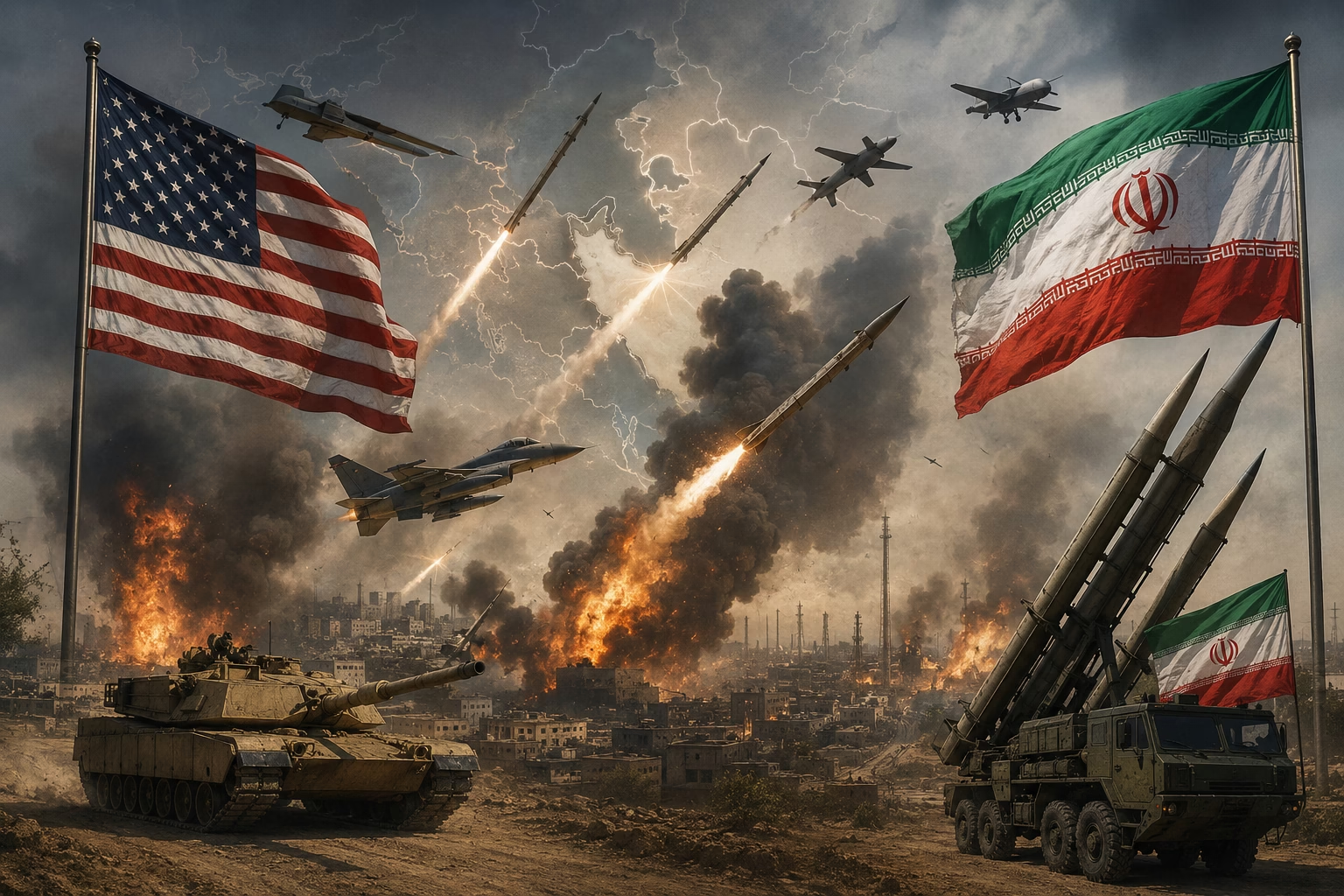
The conflict between the United States and Iran has now entered its 96th day, and the situation remains as tense as ever. What began as a series of military confrontations has evolved into a prolonged crisis with consequences reaching far beyond the Middle East. Day 96 of Iran War New attacks reported on Day 96 have once again raised fears that the conflict could spiral into a wider regional confrontation if diplomatic efforts fail to gain momentum.
For nearly three months, both countries have exchanged military strikes, political warnings, and strategic responses. While international leaders continue to call for restraint, recent developments suggest that neither side is willing to back down easily. The latest escalation has renewed concerns about regional security, global energy supplies, and the future of diplomatic negotiations.
New Attacks Renew Global Attention
Day 96 saw another round of military activity that quickly captured international attention. Reports indicated that Iranian forces launched missiles and drones toward targets associated with American interests in the Gulf region. Security forces in the area responded rapidly, activating defense systems to intercept incoming threats.Day 96 of Iran War
Shortly afterward, the United States carried out strikes against locations believed to be connected to Iranian military operations. U.S. officials described the action as a defensive measure aimed at protecting personnel and preventing future attacks.
Although such exchanges have become increasingly common during the conflict, every new attack carries the risk of further escalation. Military analysts warn that a single miscalculation could trigger a broader confrontation involving additional countries in the region.
Gulf Nations Remain on Alert
Countries across the Gulf are closely monitoring the situation as tensions continue to rise. Governments have strengthened security around airports, oil facilities, military bases, and other critical infrastructure. Authorities are also reviewing emergency response plans to prepare for any potential spillover effects from the conflict.Day 96 of Iran War
For nations located near key military and economic assets, the ongoing hostilities represent a serious concern. Many regional governments are trying to maintain stability while encouraging diplomatic solutions that could prevent further violence.
The uncertainty has also affected public confidence, with residents across the region following developments closely and hoping that tensions do not escalate further.
Economic Concerns Continue to Grow
Beyond the military dimension, the conflict is having a noticeable impact on the global economy. Investors and financial markets remain sensitive to developments in the Middle East because of the region’s importance to global energy production.
The Strait of Hormuz continues to be a major focus of international attention. This narrow waterway serves as one of the world’s most important oil transit routes, and any disruption could have significant consequences for global energy supplies.Day 96 of Iran War
As reports of fresh attacks emerged, concerns about oil prices and supply chain disruptions once again resurfaced. Market experts note that prolonged instability in the region could place additional pressure on economies already facing various global challenges.
Diplomacy Struggles to Keep Pace
While military operations dominate headlines, diplomatic efforts are continuing behind closed doors. Several countries have attempted to mediate between Washington and Tehran, hoping to reduce tensions and create opportunities for meaningful dialogue.
However, progress has been slow. Both sides remain deeply suspicious of one another, and ongoing military actions make negotiations more difficult. Each new attack adds another obstacle to already fragile diplomatic efforts.Day 96 of Iran War
Political observers believe that a lasting solution will require significant compromises from both countries. Until then, diplomacy is likely to face an uphill battle.
Humanitarian Impact Cannot Be Ignored
As the conflict stretches toward the 100-day mark, concerns about its human impact are increasing. Prolonged instability affects not only governments and militaries but also ordinary people living in the region.
Businesses face uncertainty, travel plans are disrupted, and economic activity can slow during periods of heightened tension. Humanitarian organizations continue to stress the importance of protecting civilians and avoiding actions that could worsen conditions on the ground.Day 96 of Iran War
Although the conflict has largely remained a military and geopolitical issue, experts warn that long-term instability often creates broader social and economic challenges that can take years to overcome.Day 96 of Iran War
International Community Calls for Restraint
Leaders from around the world have once again urged both countries to avoid further escalation. International organizations and foreign governments continue to emphasize the need for dialogue, warning that a wider conflict could have serious consequences for global security.
Many nations fear that additional military actions could draw other regional actors into the crisis, making it far more difficult to contain. As a result, diplomatic pressure on both sides has intensified in recent weeks.Day 96 of Iran War
The international community largely agrees that a peaceful resolution remains the most effective path forward, even though achieving that goal appears increasingly difficult.
What Happens Next?
Predicting the next phase of the conflict is challenging. Military experts suggest that both sides may continue limited operations while trying to avoid a direct large-scale war. However, the situation remains highly unpredictable.Day 96 of Iran War
Future developments will likely depend on diplomatic negotiations, regional security conditions, and the willingness of both governments to reduce tensions. A breakthrough in talks could ease concerns, while further attacks could push the crisis into an even more dangerous stage.
For now, the world continues to watch closely as one of the most significant geopolitical conflicts of recent times enters another critical chapter.Day 96 of Iran War
Conclusion
Day 96 of the Iran War has demonstrated that the conflict remains far from resolution. Fresh attacks, retaliatory military actions, and growing international concern have highlighted the fragile state of regional security. Day 96 of Iran War: While diplomatic channels remain open, meaningful progress remains elusive.
As the crisis moves closer to its 100th day, the decisions made by both the United States and Iran will play a crucial role in determining whether the conflict moves toward de-escalation or deeper confrontation. Until then, uncertainty continues to dominate the outlook for the Middle East and the wider international community.
Tamil Nadu CM Vijay Wraps Up Delhi Visit, Keeps Focus on Governance