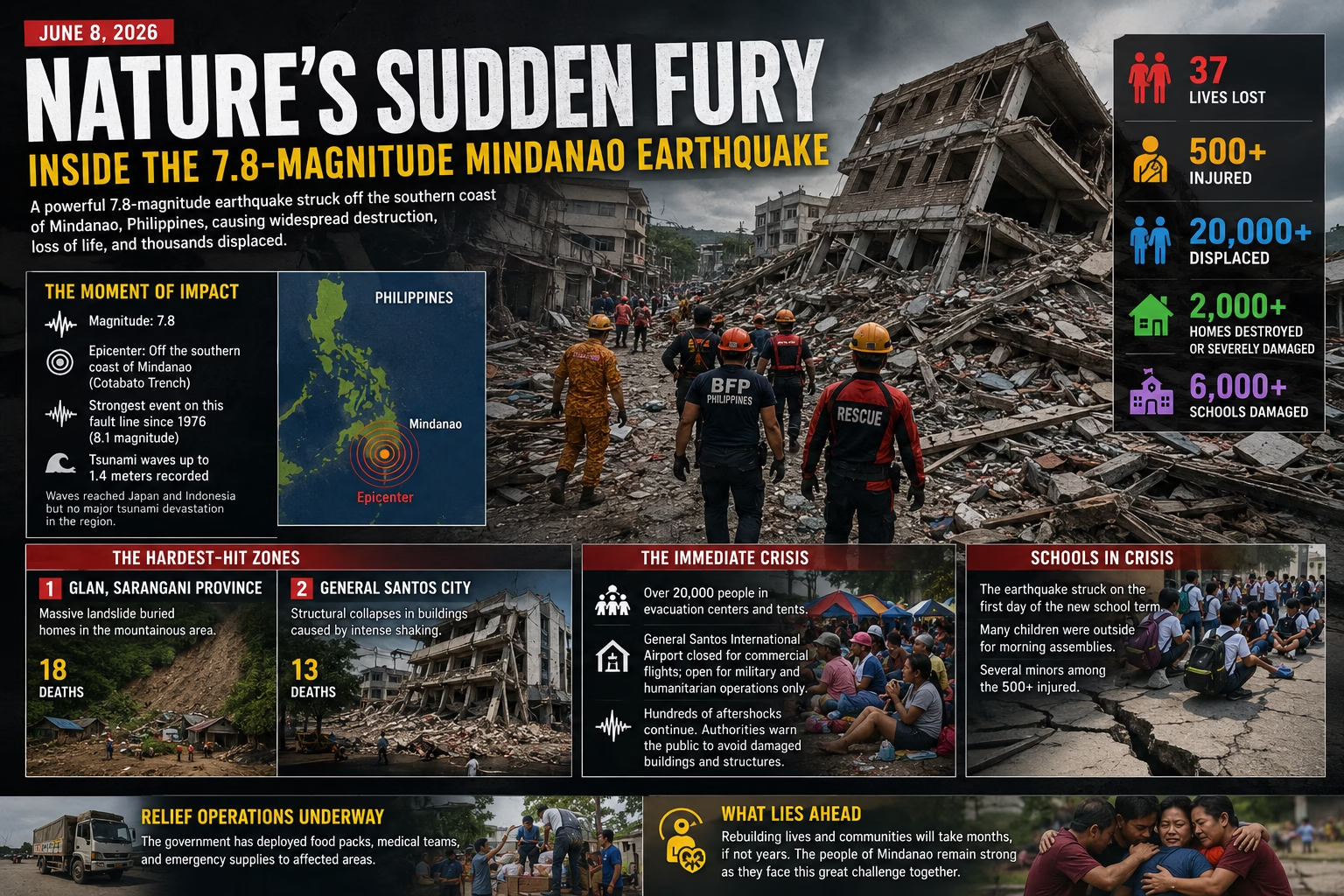
In the quiet early hours of June 8, 2026, the southern coast of the Philippines was shattered by a tectonic shift that will be remembered for decades. The massive Mindanao earthquake ripped through the region, catching millions asleep or preparing for their day. Within minutes, the physical and emotional landscape of the island changed entirely.
With the dust beginning to settle, the true human cost is coming to light: 37 lives lost, hundreds injured, and over 20,000 people displaced from their homes.
Here is a detailed look at what happened, where the damage is concentrated, and how the region is trying to pick up the pieces after this disaster.
The Moment of Impact: A Rare 7.8 Monster
The devastating Mindanao earthquake struck just off the southern coast, triggered by a violent rupture along the undersea Cotabato Trench. To put its size into perspective, a 7.8-magnitude quake releases an astronomical amount of energy—seismologists note this is the most powerful event recorded along this specific fault line since a historic 8.1-magnitude disaster back in August 1976.
Because the epicenter was under the ocean floor, the immediate concern was a catastrophic tsunami. Sirens wailed across coastal villages, prompting a panicked mass evacuation. While waves did surge up to 1.4 meters (about 4.6 feet), swallowing coastal stilt houses and sending ripples as far away as Japan and Indonesia, the ocean fortunately spared the region from a full-scale deluge.
The real destruction happened on land.
The Hardest-Hit Zones: A Tale of Two Disasters
While the entire southern region shook violently during the Mindanao earthquake, the loss of life and heavy destruction converged on two primary areas, each facing a different type of catastrophe.
1. The Landslides of Glan (Sarangani Province)
In the mountainous, scenic town of Glan, the sheer force of the shaking caused the earth to give way. A massive landslide tore down a hillside, burying an entire cluster of homes under tons of mud and rock. At least 18 people lost their lives here, making Sarangani the deadliest zone of the disaster. Rescue workers are still using heavy machinery and their bare hands to clear the debris in hopes of finding anyone left behind.
2. Structural Collapses in General Santos City
Further up the coast, General Santos City—a bustling economic and industrial hub—faced a different nightmare during the Mindanao earthquake. Here, urban infrastructure failed under the stress. Concrete walls buckled, glass shattered, and parts of commercial buildings rained down onto the streets. Thirteen fatalities were recorded in the city, mostly caused by collapsing walls and heavy falling debris.
The Cost to the Future: Schools in the Crosshairs
The timing of the disaster added a layer of heartbreak. The Mindanao earthquake struck on the very first day of the new school term following summer break. Children were arriving at schools, and many were gathered outside for morning ceremonies when the ground began to roll.
Because of this, several minors are among the 500 injured. Today, instead of filled classrooms, the region is facing a massive educational crisis. The Department of Education reports that roughly 6,000 public school buildings have sustained cracks or structural damage and must be rigorously inspected before children can step inside them again.
The Immediate Crisis: Shelters and Aftershocks
Right now, the priority is survival and basic care. More than 20,000 residents are currently sleeping in makeshift evacuation centers, gymnasiums, and tents because of the Mindanao earthquake.
The physical trauma to the region’s infrastructure is severe:
- Housing: Over 2,000 homes have been completely leveled or severely damaged.
- Air Travel: General Santos International Airport has shut down its commercial runways to assess structural safety, keeping them open exclusively for incoming military and humanitarian flights carrying aid.
- The Threat of Aftershocks: The ground hasn’t stopped moving since the main Mindanao earthquake. Hundreds of smaller tremors continue to rattle the province, forcing the Office of Civil Defense to issue strict warnings: Stay out of cracked or compromised buildings. A wall that survived the main quake could easily come down in a strong aftershock.
What Lies Ahead
The response from the capital has been swift, with the government deploying thousands of food packs, medical teams, and emergency building materials to the south. But rebuilding from the Mindanao earthquake will take months, if not years.
For the people affected, the immediate future is about finding missing loved ones, securing clean water, and coping with the psychological weight of an event that proved, once again, just how fragile our built world is when nature decides to move.