Table of Contents
In a stunning proposal that would drastically reorient the Middle East and subject a population of over a million people to further displacement, President Donald Trump declared on Tuesday that the United States “will take over” the Gaza Strip, possibly with the assistance of American troops, and that the Palestinians living there should leave.
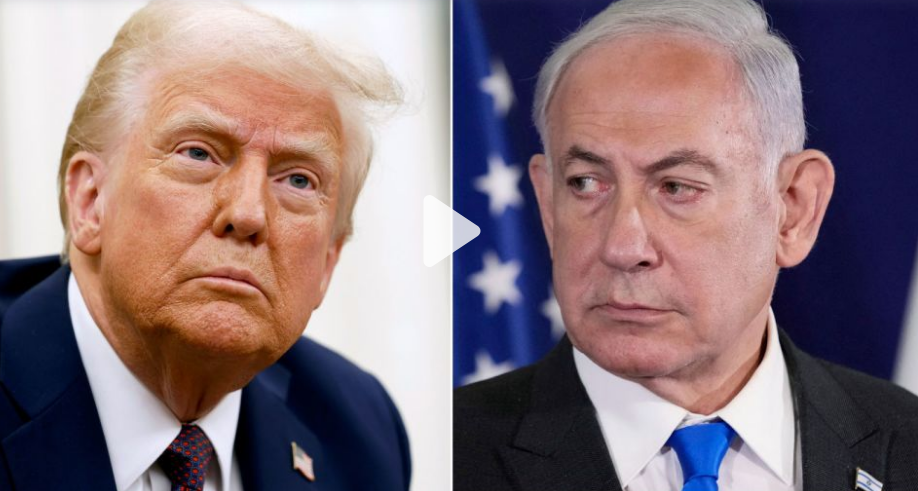
During a joint news conference with Israeli counterpart Benjamin Netanyahu, Trump declared, “The US will take over the Gaza Strip and we will do a job with it too.” He subsequently referred to his vision for the region as a new “Riviera.”
He said, “We’ll own it and be in charge of leveling the site, removing the damaged buildings, and dismantling all of the hazardous unexploded bombs and other weapons on the site.”
Trump would not rule out sending US soldiers to Gaza to cover a security void when asked about the possibility.
“We will take whatever action is required in regards to Gaza. If it is required, we will do so. He said, “We’re going to take over that piece and develop it.”
Trump’s remarks are a noteworthy declaration from a sitting American president, especially one who gained political clout in the US by denouncing America’s longest wars in the Middle East and promising to give US assets back to its people. They raise a number of concerns regarding the legal authority behind Trump’s land grab, how it would progress, and who would foot the bill.
In the White House’s East Room, Trump told reporters, “I do see a long-term ownership position, and I see it bringing great stability to that part of the Middle East, and maybe the entire Middle East.” “This was not a decision made lightly,” he subsequently stated. Everyone I’ve talked to is thrilled about the prospect of the US acquiring that property, developing it, and generating thousands of jobs with something truly amazing.
Despite Trump’s assertion that all of his interlocutors support his proposal, there will be a significant number of people in the area who disagree. Concerned about destabilization and the possibility that they would never be let to return home, Egypt and Jordan have already rejected the idea of taking in more Palestinian refugees.
According to Trump, it was just what he had in mind: a future in Gaza where Palestinians are mainly excluded.
Trump stated earlier in the day in the Oval Office, “I don’t think people should be going back to Gaza.” “I’ve heard that they have had a lot of bad luck in Gaza. They lead hellish lives. They act as though they are in hell. People should not be living in Gaza, and the only reason they wish to return—and I firmly believe this—is because they have nowhere else to go.
He clarified later that he did not see Gaza as a permanent home for Palestinians, although he did say that they may be among those who return.
Palestinians as well. There, Palestinians will reside. There will be a large population there,” he stated.
During his news conference, Trump, a former real estate developer, stated that he had researched the issue “closely, over a lot of months.”
His earlier-day proposal that Gazans relocate to a new site supplied by one or more Middle Eastern countries was followed by those remarks.
They are there because they don’t have any other options. What do they possess? Trump said, “It is a huge pile of rubble right now,” just before welcoming Netanyahu to the Oval Office for discussions.
The idea that Trump wants Gazans to permanently leave the strip is a daring move that will make him popular with Israel’s most conservative legislators but is generally unpopular with Israel’s neighbors, who have stated that they would not take in any more Palestinian refugees from the enclave.
Trump initially presented the issue as humanitarian on Tuesday, claiming that it was hard to imagine anybody would choose to stay in the area that had been devastated by the conflict.
Why would they wish to go back? Trump ignored a reporter who yelled, “Because it’s their home,” and remarked, “The place has been hell.”
He proposed giving the Palestinians a “good, fresh, beautiful piece of land” to live on in place of Gaza.
As Trump spoke, Netanyahu, who was seated next to him in the Oval Office, grinned. The Israeli leader was in Washington to find out exactly where Trump stands on the next stage of a truce in Gaza, despite competing internal demands.
Trump’s pessimistic views on Gaza as a permanent home for Palestinians, however, were sure to give his far-right supporters fodder as they have urged Netanyahu to renounce the interim truce that was agreed upon last month.

‘Hard to grasp and digest’
Following Trump’s surprising comments, two Arab leaders voiced confusion, worry, and pessimism.
According to one official, it was “rough, raw, hard to grasp and digest,” and they “need clarity and further development to become understood.”
A second official emphasized the “profound implications such proposals have on the lives and dignity of the Palestinian people, as well as the broader Middle East,” warning that the remarks might endanger the tenuous ceasefire agreement in Gaza.
“It is still a fact that 1.8 million Gazans would oppose such a plan and decline to leave,” the ambassador stated. “Under these conditions, Saudi Arabia is unlikely to pursue peace, and other nations may reevaluate their commitments to the Abraham Accords.”
Meanwhile, congressional politicians, including some members of his own party, expressed doubt about Trump’s remarks.
“We’ll listen to our Arab friends’ opinions on it. Sen. Lindsey Graham, a Republican from South Carolina, stated, “I believe that the majority of South Carolinians would probably not be enthusiastic about sending Americans to take over Gaza.” That may be troublesome, in my opinion. However, I’ll remain open-minded.
It didn’t seem plausible that the US president’s declaration that Gaza was US territory would persuade Hamas to instantly return to the bargaining table.
Trump declared his continued commitment to releasing the remaining detainees in Gaza. “If we don’t get all of the hostages, it will just make us a little more violent,” he stated.
Even officials in the outgoing Biden administration recognized that Trump’s impending arrival contributed to pressure on Israel and Hamas. Trump has taken credit for the ceasefire deal and hostages-for-ceasefire that was reached in the days prior to his inauguration.
Netanyahu commended Trump’s efforts, possibly in an attempt to win over his host.
Netanyahu stated in the Oval Office, “I believe President Trump added great force and powerful leadership to this effort.”
Despite his efforts to finalize the agreement, Trump will still be responsible for managing the last two stages of the three-phase plan.
“We’ll observe the situation. Even if we’re dealing with really complex individuals, a settlement may be reached,” he stated.
Beyond the immediate issue of the ceasefire deal, Trump and Netanyahu had a lot to talk about.
Prior to the October 7, 2023, assaults, former President Joe Biden had been working on a more comprehensive normalization of ties between Israel and its Arab neighbors, primarily Saudi Arabia. Trump, who publicly aspires to win a Nobel Peace Prize, could see a chance in this endeavor, which might change the Middle East and establish a new defense against Iran, a rival of Riyadh and Jerusalem.
It’s unclear if his remarks on Tuesday will be useful. The Saudi Foreign Ministry reiterated its long-standing stance that it will not commit to normalizing relations with Israel without assurances of a Palestinian state in a statement on X in response to Trump’s comments.
“Saudi Arabia will not establish diplomatic relations with Israel until it has achieved its goal of establishing an independent Palestinian state with East Jerusalem as its capital,” the statement read.

A complicated relationship
It remains to be seen if Netanyahu is interested in negotiation or if he views Trump’s visit to Washington as an opportunity to strike decisively against Iran, maybe even ending its nuclear program.
Prior to his visit, there was conjecture that Netanyahu may use the discussions to gauge Trump’s readiness for a direct attack, taking advantage of the fact that his relations with Washington are more cordial, Iran’s nuclear goals seem to be increasing, and Iranian proxies have been wiped out.
Prior to Netanyahu’s arrival, Trump signed an order approving a harsh stance against Iran that would keep the nation from acquiring a nuclear weapon and threatened to “obliterate” him if Tehran’s agents were to murder him.
Trump claimed to have provided instructions for his team on how to react in the event that he becomes the victim of an Iranian murder plot.
Trump declared, “I’ve left instructions.” “They will be destroyed if they do it.”
The purpose of Trump’s multi-hour visit with Netanyahu, which included the joint news conference, was to show his support for Israel.
The men’s amity, however, concealed a more nuanced connection than is commonly shown, with Trump’s remarks possibly affecting not just the Middle East’s future.
Biden’s staff was undoubtedly in favor of Trump winning in the run-up to last November’s election because Netanyahu thought he would have a far larger mandate from the US government to carry out his war objectives if Trump were elected rather than then-Vice President Kamala Harris.
Those forecasts have proven to be accurate.
Trump has already reversed one of the few Biden-era measures intended to put pressure on Israel during its assault in Gaza by lifting a ban on heavy bomb supplies to Israel.
Although Netanyahu warmly welcomed Trump’s return to the White House and he is popular in Israel, things haven’t always been this happy.
When Netanyahu congratulated Biden on winning the 2020 election, Trump felt betrayed and furious. Following his accusations of disloyalty, Trump yelled, “F**k him,” at renowned Israeli reporter Barak Ravid, who is currently a CNN analyst.
It was evident that Trump’s resentment had not completely subsided even three years after Hamas carried out the greatest terrorist strike in Israel’s history.
“Netanyahu wasn’t ready.” Trump claimed in an interview soon after the bombings, “He was not prepared, and Israel was not prepared,” remarks that many Republicans condemned.
However, Trump’s comments Tuesday, spoken alongside Netanyahu, imply that the hostility has been forgotten.
The prime minister intends to stay in Washington for a long time after his meetings with Trump on Tuesday. He is anticipated to remain at Blair House, the presidential guest mansion, until the end of the week, including for meetings on Capitol Hill, having arrived late Sunday.
New developments have been added to this article and headline.